
Contents
Overview
The genesis of the Scripps Institution of Oceanography can be traced back to the summer of 1903, when zoologist William E. Ritter, funded by private donations, established a modest marine laboratory on a sandy beach in La Jolla. This endeavor, initially known as the Marine Biological Laboratory of San Diego, was envisioned as a place for scientific inquiry into the marine life of the Pacific. A pivotal moment arrived in 1912 when Ellen Browning Scripps and her half-brother Edward W. Scripps provided substantial financial backing, allowing the institution to become part of the University of California system and officially adopt the name Scripps Institution for Biological Research. The institution's name was further refined to Scripps Institution of Oceanography in 1925, reflecting its expanding scope beyond biology to encompass the broader physical and geological aspects of the ocean. This evolution was significantly influenced by early directors like George E. Hale and Harold U. Sverdrup, who championed a more integrated, interdisciplinary approach to oceanographic research.
⚙️ How It Works
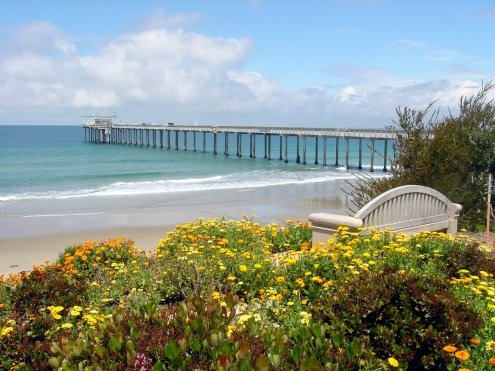
At its core, SIO operates as a nexus for scientific exploration and education, integrating research, graduate training, and public outreach. Its research activities are organized into several key divisions, including Marine Biology, Marine Chemistry and Geochemistry, Integrative Oceanography, and Geosciences. The institution deploys a sophisticated array of tools and technologies, from autonomous underwater vehicles (AUVs) and remotely operated vehicles (ROVs) to a fleet of research vessels. These platforms enable scientists to conduct fieldwork in diverse environments, from the shallow coastal waters of California to the deepest ocean trenches. SIO also houses specialized facilities such as the Scripps Center for Ocean Observatories and the Scripps Institution of Oceanography Pier, which serve as critical hubs for long-term data collection and experimental research, providing invaluable datasets for understanding complex oceanic processes.
📊 Key Facts & Numbers
The Scripps Institution of Oceanography boasts a remarkable legacy, with over 120 years of scientific discovery. Its research fleet has logged more than 1.5 million nautical miles, equivalent to circling the globe 60 times. The institution's scientists have published over 10,000 peer-reviewed articles since its inception. SIO's annual budget typically exceeds $200 million, supporting approximately 1,200 employees, including 250 research scientists and a student body of around 400 graduate students pursuing master's and doctoral degrees. The institution's iconic pier, a fixture since 1916, has been continuously monitored for temperature and salinity, providing one of the longest uninterrupted oceanographic datasets in the world, stretching back over a century. Furthermore, SIO manages the Seymour Marine Discovery Center, attracting over 100,000 visitors annually, underscoring its commitment to public engagement.
👥 Key People & Organizations
Key figures instrumental to SIO's development include its founder, William E. Ritter, who envisioned a comprehensive marine research institution. Ellen Browning Scripps provided the crucial financial support that transformed Ritter's vision into reality. Directors like Harold U. Sverdrup expanded the institution's scientific horizons, while Roger Revelle championed the study of ocean chemistry and its role in climate. More recently, Charles David Keeling's meticulous measurements of atmospheric carbon dioxide, initiated in 1958 at the Mauna Loa Observatory, have become a foundational dataset for climate science. The institution itself, as part of the University of California, San Diego, collaborates with numerous national and international bodies, including the National Science Foundation and the National Oceanic and Atmospheric Administration (NOAA), to advance global oceanographic research.
🌍 Cultural Impact & Influence
The influence of the Scripps Institution of Oceanography extends far beyond academic journals, shaping public perception and policy regarding the oceans. SIO's research has been instrumental in highlighting critical issues such as ocean acidification, the impact of climate change on marine ecosystems, and the importance of sustainable fisheries. The institution's public outreach programs, including the Seymour Marine Discovery Center, play a vital role in educating the public about marine science and conservation. Furthermore, SIO's alumni have gone on to lead major research institutions, government agencies, and environmental organizations worldwide, disseminating its scientific ethos and research methodologies across the globe. The iconic imagery of SIO's pier and its research vessels has become synonymous with oceanographic exploration in popular culture, often appearing in documentaries and educational materials.
⚡ Current State & Latest Developments
In 2024, SIO continues to push the boundaries of ocean science. Recent initiatives include the deployment of advanced sensor networks for real-time ocean monitoring and the development of sophisticated climate models to predict future oceanic changes. The institution is actively involved in international collaborations focused on understanding the impacts of rising sea levels and extreme weather events. Furthermore, SIO is investing in new research areas such as marine genomics and the exploration of deep-sea biodiversity, aiming to uncover novel biological resources and understand the resilience of marine life to environmental stressors. The ongoing expansion of its research fleet and the integration of artificial intelligence into data analysis are key developments shaping its current trajectory.
🤔 Controversies & Debates
While widely respected, SIO, like many large scientific institutions, has faced scrutiny. Debates have arisen regarding the allocation of research funding, particularly the balance between fundamental research and applied science addressing immediate environmental concerns. Historically, some criticized the institution for a perceived lack of diversity in its early years, a concern that has been actively addressed through targeted recruitment and retention programs. More recently, discussions have emerged around the ethical implications of deep-sea exploration and resource extraction, with SIO scientists contributing to the scientific discourse on responsible stewardship of marine environments. The institution's role in advising government policy on issues like offshore drilling and marine protected areas also places it at the center of complex socio-political debates.
🔮 Future Outlook & Predictions
The future of the Scripps Institution of Oceanography is intrinsically linked to the escalating challenges posed by climate change and the increasing demand for sustainable ocean resources. SIO is poised to play a pivotal role in developing innovative solutions for mitigating the impacts of global warming, such as understanding carbon sequestration in marine environments and predicting the behavior of ocean currents. The institution is also likely to expand its research into the potential of marine biotechnology and the sustainable harvesting of marine resources. With advancements in sensor technology and data analytics, SIO will continue to refine its predictive models for oceanographic phenomena, offering critical insights for coastal communities and global policymakers. The ongoing exploration of the deep ocean, driven by new submersible technologies, promises to reveal further biological and geological wonders, solidifying SIO's
💡 Practical Applications
SIO's research has been instrumental in highlighting critical issues such as ocean acidification and the impact of climate change on marine ecosystems. The institution's public outreach programs, including the Seymour Marine Discovery Center, play a vital role in educating the public about marine science and conservation.
Key Facts
- Category
- science
- Type
- topic