
Contents
- 📡 What Exactly IS a Radio Receiver?
- 🛠️ How Does It Actually Work?
- 💡 Who Needs a Radio Receiver Today?
- 🌟 Key Components & Technologies
- 🆚 Receiver Types: Analog vs. Digital
- 📈 The Evolution of Radio Reception
- 🌐 Global Reception & Frequency Bands
- 💰 Cost & Where to Find Them
- 🤔 Common Misconceptions
- 🚀 The Future of Radio Reception
- ❓ Frequently Asked Questions
- 🔗 Related Vibepedia Entries
- Frequently Asked Questions
- Related Topics
Overview
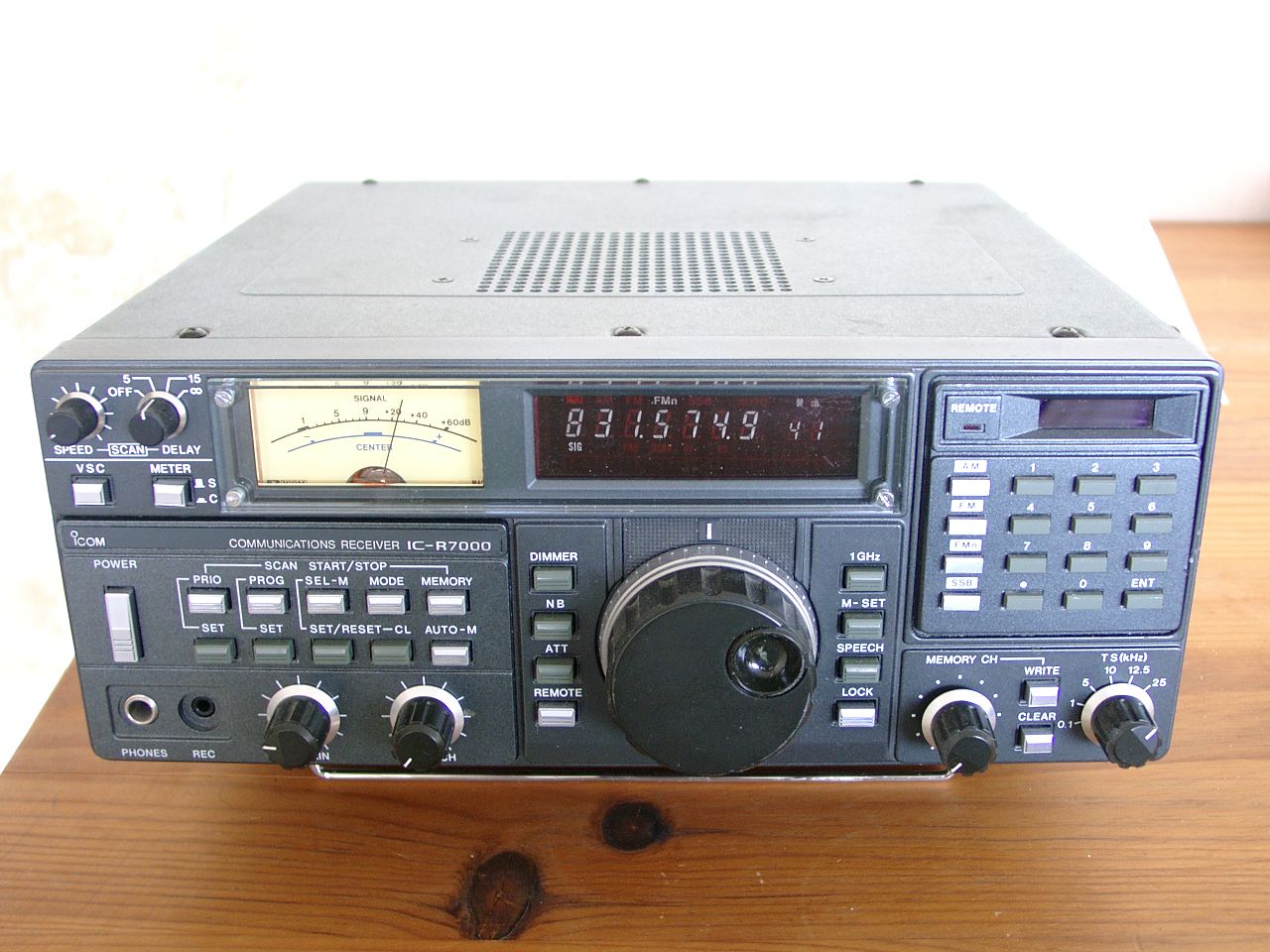
A radio receiver is the indispensable counterpart to a radio transmitter, a sophisticated electronic gadget designed to capture invisible radio waves and translate the encoded information into something we can perceive – be it sound, data, or control signals. Without a receiver, the entire concept of wireless communication, from your morning news broadcast to critical emergency alerts, would simply cease to exist. It's the silent listener in the symphony of the airwaves, making sense of the electromagnetic chaos that surrounds us. This device is fundamental to countless technologies, acting as the gateway for information transmitted across vast distances without physical wires.
🛠️ How Does It Actually Work?
At its heart, a radio receiver operates by employing an antenna to intercept ambient radio waves. These waves induce minuscule alternating currents within the antenna, which are then fed into the receiver's circuitry. The receiver's job is to meticulously isolate the specific radio frequency signal of interest from a cacophony of other signals. It achieves this using electronic filters, amplifies the weakened signal to a usable level, and finally, through a process called demodulation, extracts the original information – be it voice, music, or data – from the carrier wave. This intricate dance of filtering, amplification, and demodulation is the core magic of radio reception.
💡 Who Needs a Radio Receiver Today?
While the ubiquity of the internet might suggest otherwise, radio receivers remain critically important for a diverse range of users. Enthusiasts might use shortwave radios for global listening, amateur radio operators rely on them for ham radio communication, and emergency services depend on them for critical alerts and coordination. Beyond hobbyists, receivers are embedded in everything from your car's FM radio to sophisticated military surveillance equipment and the Wi-Fi router in your home, demonstrating their enduring relevance across personal, professional, and security sectors.
🌟 Key Components & Technologies
The essential components of a modern radio receiver include the antenna, tuned circuits for frequency selection, an amplifier to boost signal strength, and a demodulator to extract the information. Advanced receivers often incorporate digital signal processing (DSP) for superior noise reduction and signal clarity, and may feature multiple tuning stages (superheterodyne architecture) for enhanced sensitivity and selectivity. The quality and sophistication of these components directly impact the receiver's performance, determining its ability to pick up weak signals and reject interference from unwanted transmissions.
🆚 Receiver Types: Analog vs. Digital
Historically, radio receivers were predominantly analog, relying on physical components like vacuum tubes and discrete transistors to perform filtering and amplification. Modern receivers, however, increasingly leverage digital radio technologies such as DAB (Digital Audio Broadcasting) and HD Radio. Digital receivers offer improved audio quality, greater spectral efficiency, and enhanced features like data services, though analog receivers still hold sway for their simplicity, lower cost in some applications, and broad compatibility with legacy broadcasts. The choice often hinges on desired fidelity, available spectrum, and cost-effectiveness.
📈 The Evolution of Radio Reception
The journey of the radio receiver began with pioneers like Guglielmo Marconi and Nikola Tesla in the late 19th and early 20th centuries, evolving from simple crystal sets to the complex superheterodyne designs that dominated mid-20th century broadcasting. Early receivers were bulky and required significant user tuning, while later iterations became more compact and user-friendly. The advent of solid-state electronics in the 1950s and 60s dramatically reduced size and power consumption, paving the way for portable radios and the widespread integration of receiver technology into countless devices we use daily.
🌐 Global Reception & Frequency Bands
Radio waves span a vast spectrum of frequencies, each allocated for specific purposes by international agreements like those managed by the International Telecommunication Union (ITU). Common bands include AM (Amplitude Modulation) and FM (Frequency Modulation) for broadcast radio, shortwave (SW) for long-distance communication, and VHF/UHF (Very High Frequency/Ultra High Frequency) for services like public safety, amateur radio, and television broadcasting. Understanding these frequency bands is crucial for selecting a receiver capable of tuning into desired transmissions, whether for entertainment, information, or communication.
💰 Cost & Where to Find Them
The cost of radio receivers varies dramatically, from inexpensive pocket AM/FM radios costing under $20 to high-end shortwave receivers or specialized communication receivers that can run into thousands of dollars. Basic portable radios are widely available at electronics retailers and online marketplaces. More specialized equipment, such as amateur radio transceivers or professional monitoring receivers, are typically sourced from dedicated electronics suppliers and manufacturers. Prices are largely dictated by sensitivity, selectivity, frequency coverage, and the inclusion of advanced features like digital modes or software-defined radio (SDR) capabilities.
🤔 Common Misconceptions
A common misconception is that all radio receivers are simply for listening to music or news. In reality, receivers are fundamental to a vast array of wireless technologies. For instance, remote controls for cars, garage doors, and toys all employ simple receivers. GPS devices receive signals from satellites, and modern smartphones contain multiple receivers for cellular, Wi-Fi, and Bluetooth communication. The term 'radio receiver' encompasses a far broader technological scope than many people realize.
🚀 The Future of Radio Reception
The future of radio reception is increasingly intertwined with software-defined radio (SDR), where many traditional hardware functions are implemented in software. This allows for unprecedented flexibility, enabling a single piece of hardware to tune into a vast range of frequencies and decode various modulation schemes simply by updating software. We can expect receivers to become even more integrated, intelligent, and capable of seamlessly switching between different wireless protocols, potentially blurring the lines between traditional radio and other forms of wireless data transmission.
❓ Frequently Asked Questions
Q: What's the difference between AM and FM radio? A: AM (Amplitude Modulation) and FM (Frequency Modulation) are two primary methods of encoding audio information onto a radio wave. AM varies the amplitude (strength) of the carrier wave, making it more susceptible to static and interference, but allowing for simpler receiver designs and wider coverage. FM varies the frequency of the carrier wave, resulting in higher fidelity audio and greater resistance to noise, but typically with a more limited range. Most modern broadcast radios can tune into both AM and FM stations.
Section 13
Q: What is 'shortwave' radio? A: Shortwave (SW) radio refers to radio transmissions in the high frequency (HF) band, typically between 3 and 30 MHz. These frequencies have the unique property of being able to bounce off the Earth's ionosphere, allowing signals to travel vast distances around the globe. This makes shortwave radio ideal for international broadcasting and long-distance communication, enabling listeners to tune into stations from different continents.
Section 14
Q: How does a digital radio receiver differ from an analog one? A: Analog receivers process radio signals as continuous waveforms, directly translating them into sound or data. Digital receivers, on the other hand, convert the incoming radio signal into a digital format, which is then processed by a computer chip. This digital processing allows for features like improved audio quality, resistance to static, data transmission alongside audio (like song titles), and greater flexibility in signal decoding, often seen in technologies like DAB or HD Radio.
Section 15
Q: What is Software-Defined Radio (SDR)? A: Software-Defined Radio (SDR) is a radio communication system where components traditionally implemented in hardware (like mixers, filters, amplifiers, modulators/demodulators) are instead implemented using software on a personal computer or embedded system. This approach offers immense flexibility, allowing a single SDR device to be reconfigured through software to receive and transmit on different frequencies and with various modulation types, making it a powerful tool for experimentation and advanced radio applications.
Section 16
Q: Can I use my smartphone as a radio receiver? A: Many smartphones have built-in FM radio receivers, though they often require headphones to act as an antenna. For AM reception or global shortwave listening, you would typically need to use internet-based streaming apps, which are technically receiving data over Wi-Fi or cellular networks, rather than directly receiving radio waves. Some specialized external SDR dongles can also connect to smartphones to provide broader radio reception capabilities.
Section 17
Q: What is interference and how do receivers deal with it? A: Interference occurs when unwanted radio signals disrupt the reception of the desired signal. Receivers combat interference through various means, including tuned circuits that selectively amplify only the target frequency, filters that block out-of-band signals, and noise reduction techniques (especially in digital receivers) that can clean up degraded signals. The quality of a receiver is often judged by its ability to reject strong interfering signals while still picking up weak desired ones.
Section 18
Q: What are the main frequency bands for broadcast radio? A: The primary frequency bands for broadcast radio are AM (Medium Frequency, typically 530-1710 kHz in North America), FM (Very High Frequency, typically 88-108 MHz in most regions), and Shortwave (High Frequency, 3-30 MHz). Each band has different propagation characteristics, affecting range and signal quality. FM offers higher fidelity, while AM and SW can travel much farther, especially at night or under certain atmospheric conditions.
Section 19
Q: What is the role of an antenna in radio reception? A: The antenna is the crucial first component of any radio receiver. Its primary function is to capture electromagnetic energy from radio waves and convert it into electrical signals (alternating currents). The size, shape, and orientation of the antenna are critical for efficiently receiving signals on specific frequencies. A well-matched antenna significantly improves a receiver's sensitivity and overall performance.
Section 20
Q: What is demodulation? A: Demodulation is the process by which a radio receiver extracts the original information (audio, data, etc.) from the modulated radio wave. The radio wave acts as a carrier for the information. Different modulation techniques (like AM or FM) require different demodulation methods. For example, an FM receiver uses a frequency discriminator or phase-locked loop to recover the audio signal from frequency variations, while an AM receiver uses an envelope detector to recover it from amplitude variations.
Section 21
Q: What is selectivity in a radio receiver? A: Selectivity refers to a radio receiver's ability to distinguish between a desired radio signal and other signals at nearby frequencies. A receiver with high selectivity can effectively reject unwanted signals that are close to the frequency you are trying to listen to. This is crucial in crowded radio spectrum environments where many different transmissions are occurring simultaneously. It's achieved through carefully designed tuned circuits and filters.
Key Facts
- Year
- 1887
- Origin
- Marconi Company (early development)
- Category
- Electronics & Technology
- Type
- Product/Technology
Frequently Asked Questions
What's the difference between AM and FM radio?
AM (Amplitude Modulation) and FM (Frequency Modulation) are two primary methods of encoding audio information onto a radio wave. AM varies the amplitude (strength) of the carrier wave, making it more susceptible to static and interference, but allowing for simpler receiver designs and wider coverage. FM varies the frequency of the carrier wave, resulting in higher fidelity audio and greater resistance to noise, but typically with a more limited range. Most modern broadcast radios can tune into both AM and FM stations.
Do I need a special license to operate a radio receiver?
In most countries, operating a basic radio receiver for listening to broadcast stations (AM, FM, shortwave) does not require a license. However, if you intend to transmit radio signals, such as with an amateur (ham) radio, you will likely need to obtain a license by passing an examination. Some specialized receiving equipment or frequencies may also have regulatory restrictions, but general listening is typically unrestricted.
What is 'shortwave' radio?
Shortwave (SW) radio refers to radio transmissions in the high frequency (HF) band, typically between 3 and 30 MHz. These frequencies have the unique property of being able to bounce off the Earth's ionosphere, allowing signals to travel vast distances around the globe. This makes shortwave radio ideal for international broadcasting and long-distance communication, enabling listeners to tune into stations from different continents.
How does a digital radio receiver differ from an analog one?
Analog receivers process radio signals as continuous waveforms, directly translating them into sound or data. Digital receivers, on the other hand, convert the incoming radio signal into a digital format, which is then processed by a computer chip. This digital processing allows for features like improved audio quality, resistance to static, data transmission alongside audio (like song titles), and greater flexibility in signal decoding, often seen in technologies like DAB or HD Radio.
What is Software-Defined Radio (SDR)?
Software-Defined Radio (SDR) is a radio communication system where components traditionally implemented in hardware (like mixers, filters, amplifiers, modulators/demodulators) are instead implemented using software on a personal computer or embedded system. This approach offers immense flexibility, allowing a single SDR device to be reconfigured through software to receive and transmit on different frequencies and with various modulation types, making it a powerful tool for experimentation and advanced radio applications.
Can I use my smartphone as a radio receiver?
Many smartphones have built-in FM radio receivers, though they often require headphones to act as an antenna. For AM reception or global shortwave listening, you would typically need to use internet-based streaming apps, which are technically receiving data over Wi-Fi or cellular networks, rather than directly receiving radio waves. Some specialized external SDR dongles can also connect to smartphones to provide broader radio reception capabilities.
What is interference and how do receivers deal with it?
Interference occurs when unwanted radio signals disrupt the reception of the desired signal. Receivers combat interference through various means, including tuned circuits that selectively amplify only the target frequency, filters that block out-of-band signals, and noise reduction techniques (especially in digital receivers) that can clean up degraded signals. The quality of a receiver is often judged by its ability to reject strong interfering signals while still picking up weak desired ones.