
Contents
Overview
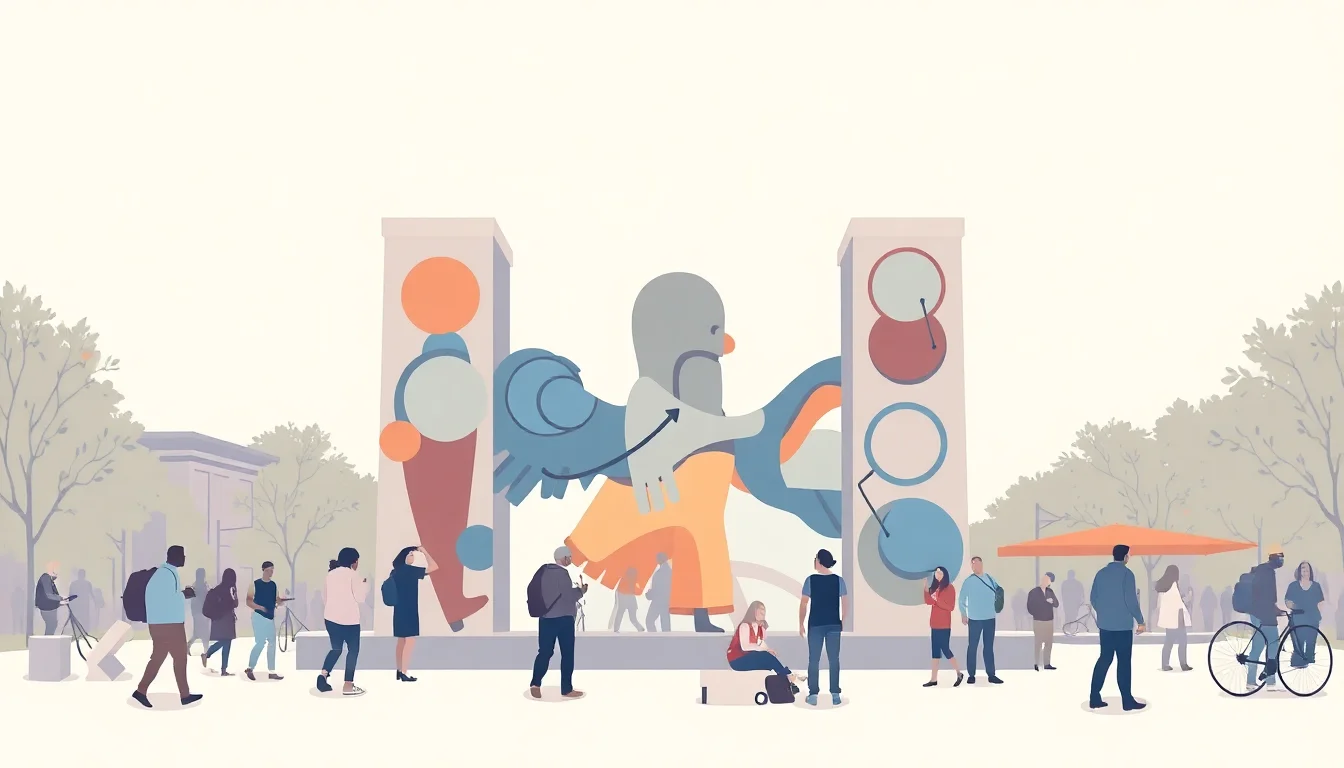
Public art has roots that trace back to ancient civilizations, where monumental structures like the Colosseum in Rome and the Parthenon in Athens served not only as architectural feats but also as cultural symbols. In the 20th century, movements such as the Harlem Renaissance and the rise of modernism brought public art into urban landscapes, with artists like Diego Rivera and his murals in Mexico City showcasing social and political themes. The advent of street art in the late 20th century, with figures like Banksy and Jean-Michel Basquiat, challenged traditional notions of public art, blurring the lines between sanctioned and unsanctioned works.
⚙️ How It Works
Public art operates through a collaborative process involving artists, community members, and local governments. Projects often begin with community engagement initiatives, where artists like Christo and Jeanne-Claude have famously involved the public in their large-scale installations. The procurement process can vary, with some artworks being commissioned by municipalities or funded through grants, while others emerge organically from grassroots movements. The maintenance of public art is also crucial, as seen with the ongoing preservation efforts for works like the Chicago Picasso, ensuring that these pieces remain accessible and relevant to the public.
🌍 Cultural Impact
The cultural impact of public art is profound, as it can transform urban environments and foster community identity. Public art initiatives, such as the Philadelphia Mural Arts Program, have demonstrated how murals can revitalize neighborhoods and promote social cohesion. Additionally, public art can serve as a platform for social commentary, addressing issues like climate change, racial justice, and community history, as seen in the works of artists like Ai Weiwei. The rise of digital public art, including projections and interactive installations, has further expanded the ways in which art can engage the public, making it more accessible to diverse audiences.
🔮 Legacy & Future
Looking to the future, public art is poised to evolve with advancements in technology and shifts in societal values. As cities become more inclusive and diverse, public art will likely reflect these changes, incorporating voices from underrepresented communities. Initiatives like the Public Art Fund in New York City are already exploring innovative ways to integrate technology into public art, such as augmented reality experiences. The legacy of public art will continue to challenge perceptions, inspire dialogue, and enhance the cultural fabric of communities worldwide.
Key Facts
- Year
- 20th century to present
- Origin
- Global, with significant developments in urban areas
- Category
- culture
- Type
- concept
Frequently Asked Questions
What is public art?
Public art refers to artworks that are created for public spaces, intended to be accessible and engage the community.
How is public art funded?
Funding for public art can come from government grants, private donations, or community fundraising initiatives.
Can street art be considered public art?
Yes, street art is increasingly recognized as a form of public art, although it often lacks official sanction.
What are some famous examples of public art?
Notable examples include the Chicago Picasso, the Berlin Wall murals, and the installations of Christo and Jeanne-Claude.
How does public art impact communities?
Public art can enhance community identity, foster social cohesion, and stimulate economic development through increased tourism.