
Contents
Overview
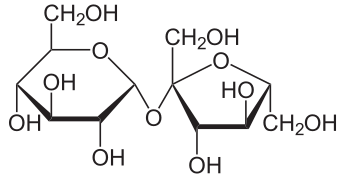
Sucrose, commonly known as table sugar, is a disaccharide with the chemical formula C12H22O11. It's formed by the glycosidic linkage of two simpler sugars: glucose and fructose. This crystalline carbohydrate is naturally synthesized by plants, serving as their primary energy storage molecule, and is commercially extracted from sugarcane and sugar beets. Its chemistry dictates its physical properties, reactivity, and biological roles, from its characteristic sweetness and solubility to its complex enzymatic hydrolysis and Maillard reactions. Understanding sucrose chemistry is fundamental to food science, biochemistry, and industrial processing, influencing everything from confectionery production to metabolic pathways.
🎵 Origins & History
The story of sucrose is as old as agriculture itself. The development of sugar beet processing in Europe, particularly in France under Napoleon, provided a crucial alternative source when Atlantic trade routes were disrupted, solidifying sucrose's global presence. The meticulous work of chemists like Augustus Kepler in the 19th century began to unravel its molecular structure, laying the groundwork for modern sucrose chemistry.
⚙️ How It Works
At its molecular core, sucrose is a non-reducing sugar. When dissolved in water, sucrose molecules are surrounded by polar water molecules, leading to its high solubility. Under heat, sucrose undergoes caramelization, a complex process involving dehydration and fragmentation that produces hundreds of flavor and aroma compounds. It also participates in the Maillard reaction with amino acids, crucial for browning and flavor development in cooked foods. Enzymatic hydrolysis, catalyzed by enzymes like invertase, breaks sucrose back into its constituent monosaccharides, glucose and fructose, a process vital in biological systems and food fermentation.
📊 Key Facts & Numbers
Globally, an estimated 185 million metric tons of sugar were produced in the 2022-2023 harvest year, with Brazil and India leading production, accounting for roughly 35% and 15% of the total, respectively. The global sugar market is valued at over $60 billion annually. Pure sucrose has a sweetness intensity approximately 200 times that of saccharin, though this is subjective and varies with concentration and temperature. Its melting point is around 186 °C (367 °F). In the human body, 1 gram of sucrose provides about 4 kilocalories of energy. The refining process can yield sucrose crystals with purities exceeding 99.9%.
👥 Key People & Organizations
Pioneering work in carbohydrate chemistry by scientists like Emil Fischer in the late 19th and early 20th centuries was foundational to understanding sucrose's structure and stereochemistry. Horace Bates revolutionized sugar refining in the late 19th century with his eponymous company, establishing efficient industrial processes. Organizations like the International Sugar Organization (ISO) track global production and trade data, providing critical market intelligence. Major sugar producers and refiners, such as Tate & Lyle and Ingredion, are key players in the industrial application of sucrose chemistry, developing specialized ingredients and processing technologies. Research institutions like the Hawaii Agriculture Research Center continue to explore sugarcane genetics and processing improvements.
🌍 Cultural Impact & Influence
Sucrose is more than just a sweetener; it's a cultural cornerstone. The "sugar rush" is a widely recognized phenomenon, though its physiological basis is debated. The global demand for sucrose has profoundly shaped economies, leading to the rise and fall of colonial empires and influencing geopolitical relationships. Its presence in countless recipes, from delicate pastries to savory sauces, makes it an indispensable ingredient in cuisines worldwide. The historical commodification of sugar is inextricably linked to the transatlantic slave trade, a dark chapter that continues to be examined in historical and cultural discourse. The aesthetic of crystalline sugar, from sparkling granulated sugar to intricate spun sugar sculptures, also holds significant artistic value.
⚡ Current State & Latest Developments
Current research in sucrose chemistry is increasingly focused on sustainable production methods and novel applications. Scientists are exploring enzymatic synthesis of sucrose analogs with modified properties, such as reduced caloric content or altered sweetness profiles. Advances in genetic engineering of sugarcane and sugar beets aim to increase yields and disease resistance, while also potentially altering sugar composition. The development of biodegradable plastics derived from sucrose is another active area, offering a greener alternative to petroleum-based polymers. Furthermore, understanding the precise mechanisms of sucrose's role in cellular signaling and metabolism continues to be a frontier in biochemical research, particularly in relation to diseases like type 2 diabetes.
🤔 Controversies & Debates
The health implications of high sucrose consumption are a major point of contention. The scientific community continues to investigate the specific metabolic pathways affected by sucrose, particularly the role of fructose in liver fat accumulation and insulin resistance.
🔮 Future Outlook & Predictions
The future of sucrose chemistry likely lies in its diversification beyond simple sweetness. Researchers are investigating sucrose-based surfactants and emulsifiers for use in cosmetics and pharmaceuticals, leveraging its biocompatibility and biodegradability. The development of advanced materials, such as sucrose polyesters that mimic fat but are indigestible, offers potential for reduced-calorie food products. Furthermore, as the world seeks more sustainable energy sources, exploring sucrose as a feedstock for biofuels or bioplastics, potentially through advanced fermentation or chemical conversion processes, remains a promising avenue. The challenge will be to innovate in ways that are both economically viable and environmentally responsible, moving beyond the historical legacy of intensive monoculture.
💡 Practical Applications
Sucrose's practical applications are vast and deeply integrated into modern life. In the food industry, it's not just a sweetener but also a bulking agent, texturizer, preservative, and browning agent. It's essential in baking for tenderizing dough, providing structure, and contributing to crust formation. In confectionery, it's the backbone of candies, chocolates, and desserts. Beyond food, sucrose is used as a cryoprotectant in biological sample preservation, helping to stabilize cells and tissues during freezing. It also finds use in pharmaceuticals as an excipient in tablet formulations and as a component in some cough syrups. Industrial applications include its use in fermentation processes to produce ethanol and other biochemicals.
Key Facts
- Category
- science
- Type
- concept