
Contents
- 🌕 Overview: Your Cosmic Neighbor
- 📍 Location & Access: The Ultimate Getaway
- ⏰ Orbital Mechanics: A Cosmic Dance
- 🔭 What to See: A Familiar Yet Alien Landscape
- 💰 The Cost of Visiting: Beyond Your Wildest Dreams
- ⭐ Historical Significance: A Giant Leap for Mankind
- 🚀 Future Prospects: Lunar Colonization and Beyond
- ⚖️ Controversies & Debates: Who Owns the Moon?
- 💡 Practical Tips for Lunar Observation
- 🤝 Getting Started: Your First Step Towards the Moon
- Frequently Asked Questions
- Related Topics
Overview
The Moon, Earth's only natural satellite, has captivated humanity since the dawn of time, influencing tides, cultures, and scientific inquiry. Its formation, widely attributed to a giant impact event billions of years ago, has left a geological record that continues to be studied. Beyond its astronomical significance, the Moon has been a focal point for geopolitical ambition, most notably during the Space Race, and now stands as a potential stepping stone for further space exploration and resource utilization. Understanding its phases, its influence on Earth, and the ongoing efforts to return and establish a presence there is crucial for grasping our place in the cosmos.
🌕 Overview: Your Cosmic Neighbor
The Moon, Earth's sole natural satellite, is a celestial body that has captivated humanity since time immemorial. It's not just a pretty face in the night sky; it's a dynamic world with a profound influence on our planet, driving tides and stabilizing Earth's axial tilt. For anyone with a curious mind and a penchant for the cosmic, understanding the Moon is a fundamental step in appreciating our place in the universe. This guide serves as your essential primer, covering everything from its basic orbital mechanics to the ambitious future of lunar exploration.
📍 Location & Access: The Ultimate Getaway
The Moon's 'location' is a constant 384,399 kilometers (238,854 miles) away, a distance that, while vast, is remarkably close in astronomical terms – roughly 30 times Earth's diameter. Access, for now, is limited to highly trained astronauts and sophisticated robotic probes. However, the dream of accessible lunar tourism is a driving force behind current space exploration initiatives, with private companies like SpaceX aiming to make the journey more feasible.
⏰ Orbital Mechanics: A Cosmic Dance
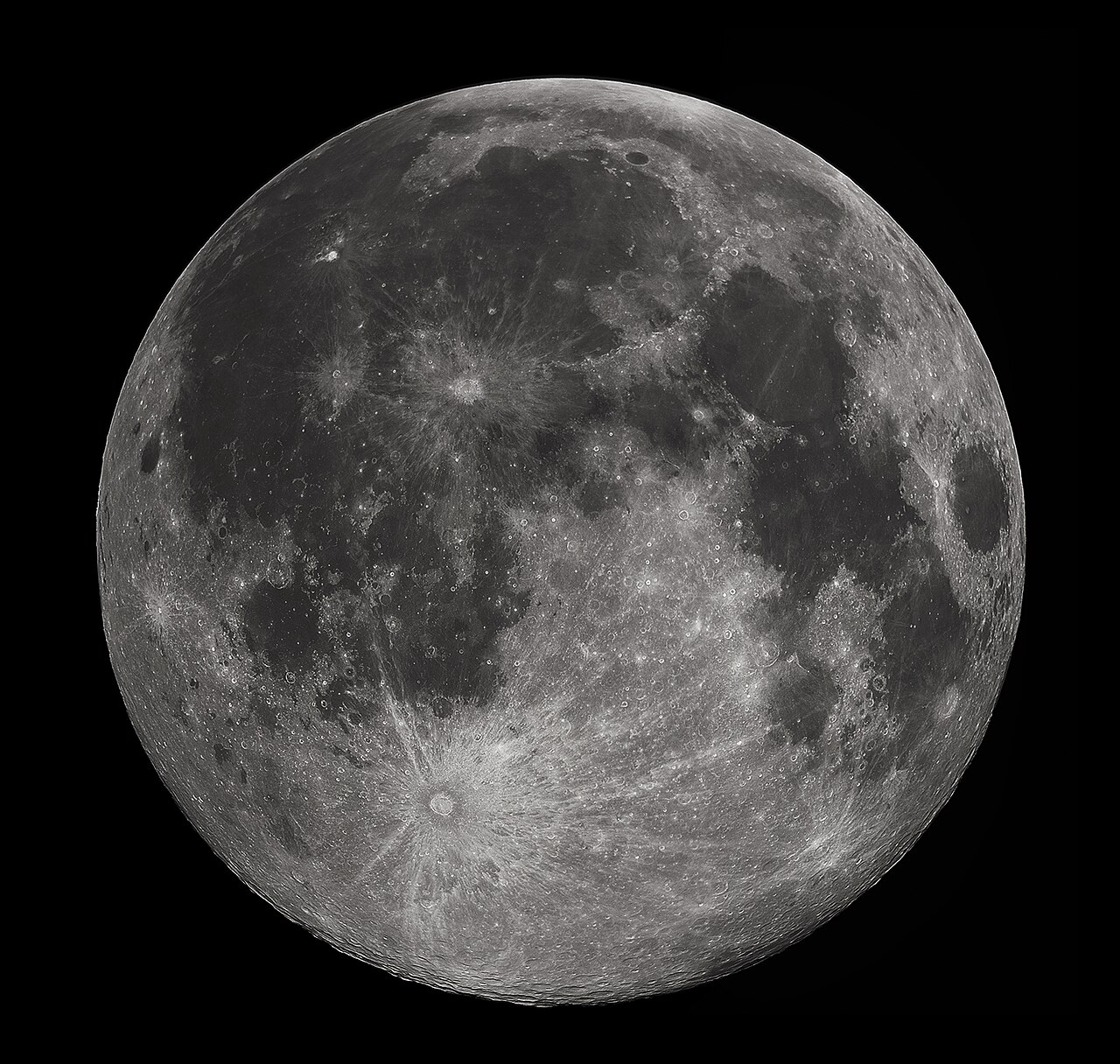
The Moon's orbit around Earth is a precisely choreographed cosmic ballet, taking approximately 29.5 days to complete a full cycle relative to the Sun (a synodic month). This orbital period is inextricably linked to its rotation due to a phenomenon known as tidal locking. Gravitational forces have ensured that the Moon always presents the same face – the 'near side' – to Earth, a constant reminder of the powerful forces at play in our solar system.
🔭 What to See: A Familiar Yet Alien Landscape
While the Moon's surface appears relatively uniform from Earth, closer inspection reveals a starkly beautiful, alien landscape. Dominated by impact craters, vast basaltic plains known as 'maria' (seas), and rugged highlands, it's a testament to billions of years of bombardment and geological activity. Future lunar missions aim to explore these features in greater detail, seeking resources and understanding the Moon's formation history, a quest that has fascinated geologists for decades.
💰 The Cost of Visiting: Beyond Your Wildest Dreams
The 'price' of a trip to the Moon is currently astronomical, measured in billions of dollars for government-funded missions and potentially hundreds of millions for future private ventures. While direct personal visits remain the stuff of science fiction for the average person, the 'cost' of understanding the Moon is negligible. Access to telescopic imagery, scientific data from NASA and other space agencies, and educational resources makes lunar knowledge readily available.
⭐ Historical Significance: A Giant Leap for Mankind
The Moon's historical significance is monumental, most famously marked by the Apollo 11 mission on July 20, 1969, when Neil Armstrong and Buzz Aldrin became the first humans to walk on its surface. This 'giant leap' not only represented a pinnacle of human achievement but also fundamentally altered our perspective of Earth and our capabilities. The lunar landings remain a potent symbol of human ingenuity and the drive for exploration.
🚀 Future Prospects: Lunar Colonization and Beyond
The future of lunar presence is a hot topic. Concepts range from establishing permanent lunar bases for scientific research and resource extraction (like water ice) to using the Moon as a stepping stone for deeper space missions. Companies like Blue Origin and SpaceX are actively developing technologies for sustained human presence, envisioning a future where the Moon is not just visited, but inhabited.
⚖️ Controversies & Debates: Who Owns the Moon?
The question of 'who owns the Moon?' is a complex one, rooted in the Outer Space Treaty of 1967. This international agreement, signed by over 100 nations, declares that outer space, including the Moon and other celestial bodies, is not subject to national appropriation by claim of sovereignty. However, the burgeoning interest in lunar resource utilization has sparked debates about how to manage and regulate these activities to prevent conflict and ensure equitable access.
💡 Practical Tips for Lunar Observation
For aspiring lunar observers, a good pair of binoculars or a small telescope can reveal incredible detail. Look for the distinct phases of the Moon, track the terminator (the line between day and night) as it sweeps across craters, and identify the prominent dark 'maria'. Understanding the lunar phases and their timing is key to appreciating the Moon's constant celestial dance with Earth.
🤝 Getting Started: Your First Step Towards the Moon
To begin your journey with the Moon, start with the basics: observe it regularly with the naked eye, binoculars, or a telescope. Familiarize yourself with its phases and major features. Explore the wealth of information available from space agencies like NASA and the European Space Agency (ESA). Consider joining a local astronomy club to share observations and learn from experienced enthusiasts. The Moon is always there, waiting to be explored.
Key Facts
- Year
- Formation: ~4.5 billion years ago
- Origin
- Natural Satellite of Earth
- Category
- Astronomy & Space Exploration
- Type
- Celestial Body
Frequently Asked Questions
Why does the Moon always show the same face to Earth?
This phenomenon is called tidal locking. Over billions of years, Earth's gravitational pull has slowed the Moon's rotation until its rotation period perfectly matches its orbital period. This means it takes the Moon the same amount of time to spin on its axis as it does to orbit Earth, resulting in the same side always facing us.
What are the 'seas' on the Moon?
The dark, smooth areas on the Moon's surface are called 'maria' (Latin for seas). They are not actual bodies of water but vast plains of solidified basaltic lava that erupted from the Moon's interior billions of years ago, filling large impact basins.
Has anyone lived on the Moon?
Yes, a total of 12 astronauts, all American men, have walked on the Moon during the Apollo program between 1969 and 1972. No one has lived there permanently, though future missions aim to establish sustained human presence.
Can we mine resources on the Moon?
Scientists believe the Moon holds valuable resources, particularly water ice in permanently shadowed craters near the poles, and potentially Helium-3, which could be used in future fusion reactors. The Outer Space Treaty of 1967 currently prohibits national appropriation, but international discussions are ongoing regarding resource extraction.
How does the Moon affect Earth?
The Moon's most significant effect is causing Earth's tides through its gravitational pull. It also helps to stabilize Earth's axial tilt, which contributes to a more stable climate over long periods. Without the Moon, Earth's tilt would likely wobble much more dramatically.
What is the difference between a lunar eclipse and a solar eclipse?
A lunar eclipse occurs when Earth passes directly between the Sun and the Moon, casting a shadow on the Moon. A solar eclipse happens when the Moon passes directly between the Sun and Earth, blocking the Sun's light and casting a shadow on Earth. Both are fascinating astronomical events that depend on precise orbital alignments.