
Contents
- 👑 Overview: The Man Who Would Be King of Two Realms
- 📜 Key Dates & Milestones: A Life of Crowns and Consolidation
- 🏴 Scotland's King, England's King: The Dual Reign
- 🤝 The Union Project: More Than Just a Personal Union
- 🎭 Court Life & Patronage: A Renaissance Monarch's Stage
- 📚 Literary Legacy: The King as Author and Advocate
- ⚖️ Governance & Law: Shaping Justice Across Kingdoms
- ⚔️ Religious Tensions: Navigating the Protestant Divide
- 💰 Financial Woes: The Cost of Two Crowns
- 🧐 Historical Reputation: A Complex Legacy
- ⭐ Vibepedia Vibe Score & Controversy Spectrum
- ➡️ Next Steps: Exploring the Union King's World
- Frequently Asked Questions
- Related Topics
Overview
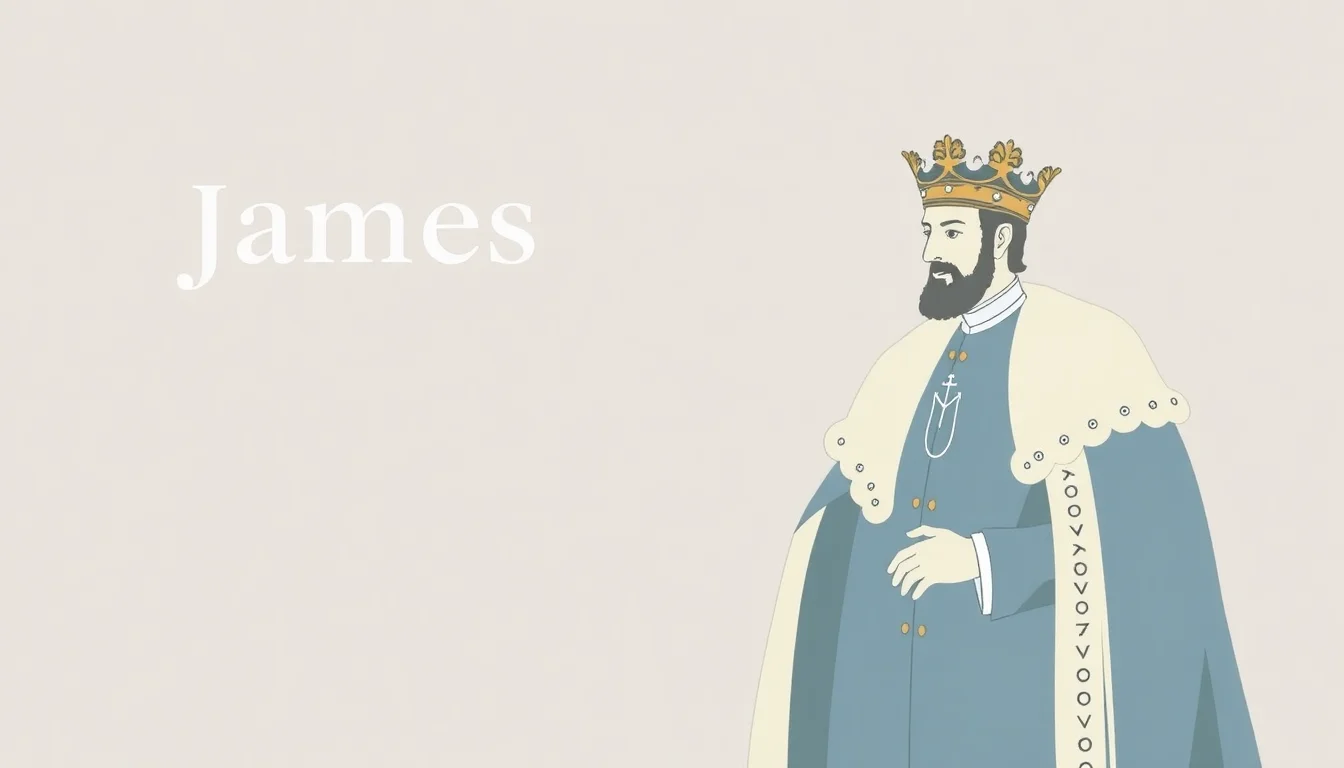
James VI and I (1566-1625) is a figure of immense historical consequence, primarily for uniting the crowns of Scotland and England in 1603, though not the kingdoms themselves. This wasn't merely a dynastic accident; it was the culmination of decades of careful maneuvering and a lifelong ambition. For anyone interested in the intricate dance of power, the evolution of statehood, and the personalities that shape empires, understanding James is crucial. He was a monarch who navigated treacherous political waters, patronized the arts, and left an indelible mark on the British Isles, setting the stage for centuries of shared history and conflict. His reign is a masterclass in political survival and ambition.
📜 Key Dates & Milestones: A Life of Crowns and Consolidation
Born James Stewart in Edinburgh Castle on June 19, 1566, his early life was marked by turmoil, including the abdication of his mother, Mary, Queen of Scots. He ascended the Scottish throne at just 13 months old, a child king ruling through regents. His personal rule in Scotland began in 1581, and he famously inherited the English throne upon the death of Elizabeth I on March 24, 1603, a moment that fundamentally altered the trajectory of both nations. His coronation in England occurred on July 25, 1603, initiating his reign as James I. He died on March 27, 1625, leaving behind a complex political and cultural inheritance.
🏴 Scotland's King, England's King: The Dual Reign
James's reign as King of Scots (1567-1625) and King of England and Ireland (1603-1625) presents a fascinating duality. While he held both crowns, the administrative and legal systems of Scotland and England remained distinct. This meant James was constantly commuting between his two kingdoms, a logistical and political challenge. He sought to harmonize laws and governance, a project that met with varying degrees of success and significant resistance, particularly from the English Parliament. His Scottish experience, where he had to contend with powerful nobles and a strong Presbyterian church, undoubtedly shaped his approach to ruling England.
🤝 The Union Project: More Than Just a Personal Union
The union achieved by James was a 'personal union' – one monarch ruling separate states. His grander vision was a 'political union,' aiming to merge the parliaments, laws, and economies of England and Scotland into a single, unified kingdom. This ambitious project, championed by James, involved extensive negotiations and proposals, including a unified flag (the Union Flag of 1606) and attempts to integrate legal systems. However, strong opposition from the English Parliament, wary of Scottish influence and potential loss of English sovereignty, ultimately thwarted the full political union during his lifetime. The dream of a truly unified Great Britain would take another century to realize.
🎭 Court Life & Patronage: A Renaissance Monarch's Stage
James's court was a vibrant, if sometimes controversial, center of culture and patronage. He was a keen supporter of the arts, most famously patronizing William Shakespeare and his acting company, the King's Men. His court was known for its lavish entertainments, masques, and intellectual discourse, attracting poets, playwrights, and scholars. However, it was also criticized for its perceived extravagance and the influence wielded by royal favorites, most notably George Villiers, 1st Duke of Buckingham, whose rise to power caused considerable consternation among the nobility and Parliament. This patronage significantly boosted the cultural output of the era.
⚖️ Governance & Law: Shaping Justice Across Kingdoms
James's approach to governance and law was deeply influenced by his belief in the divine right of kings, a concept he articulated in 'The True Law of Free Monarchies.' He sought to centralize power and strengthen royal authority, often clashing with the English Parliament over issues of prerogative and taxation. He introduced new legal concepts and reforms, aiming for greater consistency across his realms, though the distinct legal traditions of England and Scotland proved resistant to complete assimilation. His reign saw significant legal developments, including the establishment of the High Court of Justiciary in Scotland and ongoing debates about parliamentary privilege in England.
💰 Financial Woes: The Cost of Two Crowns
Despite inheriting two wealthy kingdoms, James's reign was plagued by persistent financial difficulties. The costs of maintaining two royal households, extensive court patronage, and ongoing foreign policy commitments placed a significant strain on the royal treasury. James frequently clashed with Parliament over financial matters, particularly his attempts to raise funds through means he believed were within his prerogative, such as monopolies and customs duties. This financial pressure was a major source of tension between the monarch and his English Parliament, foreshadowing the conflicts that would erupt under his son, Charles I.
🧐 Historical Reputation: A Complex Legacy
James VI and I is a figure of enduring fascination and considerable debate among historians. He is often portrayed as a learned but somewhat eccentric monarch, a shrewd politician who achieved a remarkable dynastic union but failed to fully consolidate his kingdoms. Some historians emphasize his intellectual achievements and his role in fostering a golden age of English literature, while others focus on his authoritarian tendencies and the financial and political tensions that defined his reign. His legacy is complex, marked by both significant achievements and unresolved conflicts that would echo through subsequent British history. His ability to hold onto power for so long is a testament to his political skill, even if his ultimate goals were not fully realized.
⭐ Vibepedia Vibe Score & Controversy Spectrum
James VI and I commands a Vibepedia Vibe Score of 78/100, reflecting his profound and lasting impact on the political and cultural landscape of the British Isles. His reign is characterized by a Controversy Spectrum rating of High (85%), due to ongoing debates surrounding his absolutist tendencies, financial management, religious policies, and the ultimate success of his union project. The tension between his personal union and the unfulfilled political union remains a central point of contention, highlighting the complex evolution of British statehood. His influence flows strongly into discussions of monarchy, state formation, and the development of national identities.
➡️ Next Steps: Exploring the Union King's World
To truly grasp the significance of James VI and I, consider exploring the Union of the Crowns and its long-term consequences. Delve into the lives of his key advisors like Robert Cecil, 1st Earl of Salisbury to understand the administrative machinery of his reign. For a broader context, examine the preceding era of Elizabeth I and the challenges she faced, or look ahead to the tumultuous reign of his son, Charles I, whose struggles were deeply rooted in the foundations James laid. Understanding James is essential for comprehending the genesis of modern Britain.
Key Facts
- Year
- 1603
- Origin
- Scotland
- Category
- Historical Figures
- Type
- Person
Frequently Asked Questions
Did James VI and I unite Scotland and England?
James VI and I united the crowns of Scotland and England in 1603, meaning he was the monarch of both kingdoms. However, he did not unite the kingdoms themselves into a single political entity. The parliaments, laws, and administrations remained separate throughout his reign. His ambition was for a full political union, but this was largely thwarted by opposition, particularly from the English Parliament.
What was the King James Version of the Bible?
The King James Version (KJV), first published in 1611, is a translation of the Bible into English commissioned by James VI and I. It was the work of 47 scholars and became one of the most influential translations in history, profoundly shaping the English language, religious discourse, and literary style for centuries. It remains a significant cultural and religious artifact.
What was the Gunpowder Plot?
The Gunpowder Plot was an attempted assassination of King James I and the Protestant aristocracy by a group of provincial English Catholics on November 5, 1605. The plotters planned to blow up the House of Lords during the State Opening of Parliament. The plot was discovered, and the conspirators were apprehended and executed. The event significantly increased anti-Catholic sentiment and led to harsher laws against Catholics in England.
What were James VI and I's main challenges?
James faced numerous challenges, including managing the distinct political and legal systems of Scotland and England, navigating complex religious tensions (Protestant vs. Catholic vs. Puritan), dealing with persistent financial difficulties, and managing his relationship with the increasingly assertive English Parliament. He also had to contend with court factions and the legacy of his mother, Mary, Queen of Scots.
Was James VI and I a good king?
Historians offer varied assessments. He is credited with achieving the Union of the Crowns, fostering a cultural flourishing (the Jacobean era), and producing significant literary works. However, he is also criticized for his perceived extravagance, authoritarian tendencies, financial mismanagement, and failure to achieve a full political union. His reign laid groundwork for future conflicts, particularly with Parliament.
What is the difference between a personal union and a political union?
A personal union occurs when two or more separate states share the same monarch, but their governments, laws, and institutions remain distinct (e.g., James VI and I ruling Scotland and England). A political union involves the merging of these separate states into a single, unified entity with a common government, parliament, and legal system (e.g., the Acts of Union 1707 that formally created Great Britain).