
Contents
Overview
The genesis of Islamic art and architecture is inextricably linked to the rise of Islam in the Arabian Peninsula. Early Islamic art drew heavily from the existing artistic traditions of the conquered territories, including Byzantine, Sasanian Persian, and even Roman and Indian influences. The Umayyad Caliphate (661-750 CE), with its capital in Damascus, was instrumental in synthesizing these disparate elements, evident in the Dome of the Rock (completed 691-692 CE) in Jerusalem, which features Byzantine mosaics alongside Sasanian-style vegetal motifs and early Arabic inscriptions. The Abbasid Caliphate (750-1258 CE), shifting the capital to Baghdad, fostered a distinct style characterized by increased abstraction, the development of the arabesque, and the flourishing of calligraphy as a primary decorative element. Later dynasties, such as the Fatimids in Egypt, the Seljuks in Persia and Anatolia, and the Mughals in India, each contributed unique innovations, leading to a rich tapestry of regional styles that collectively form the broad category of Islamic art and architecture. The term 'Islamic art' itself was largely a construct of Western art historians in the late 19th century, aiming to categorize the art produced in Muslim-majority regions, a label that has since been both embraced and critiqued for its potential oversimplification.
⚙️ How It Works
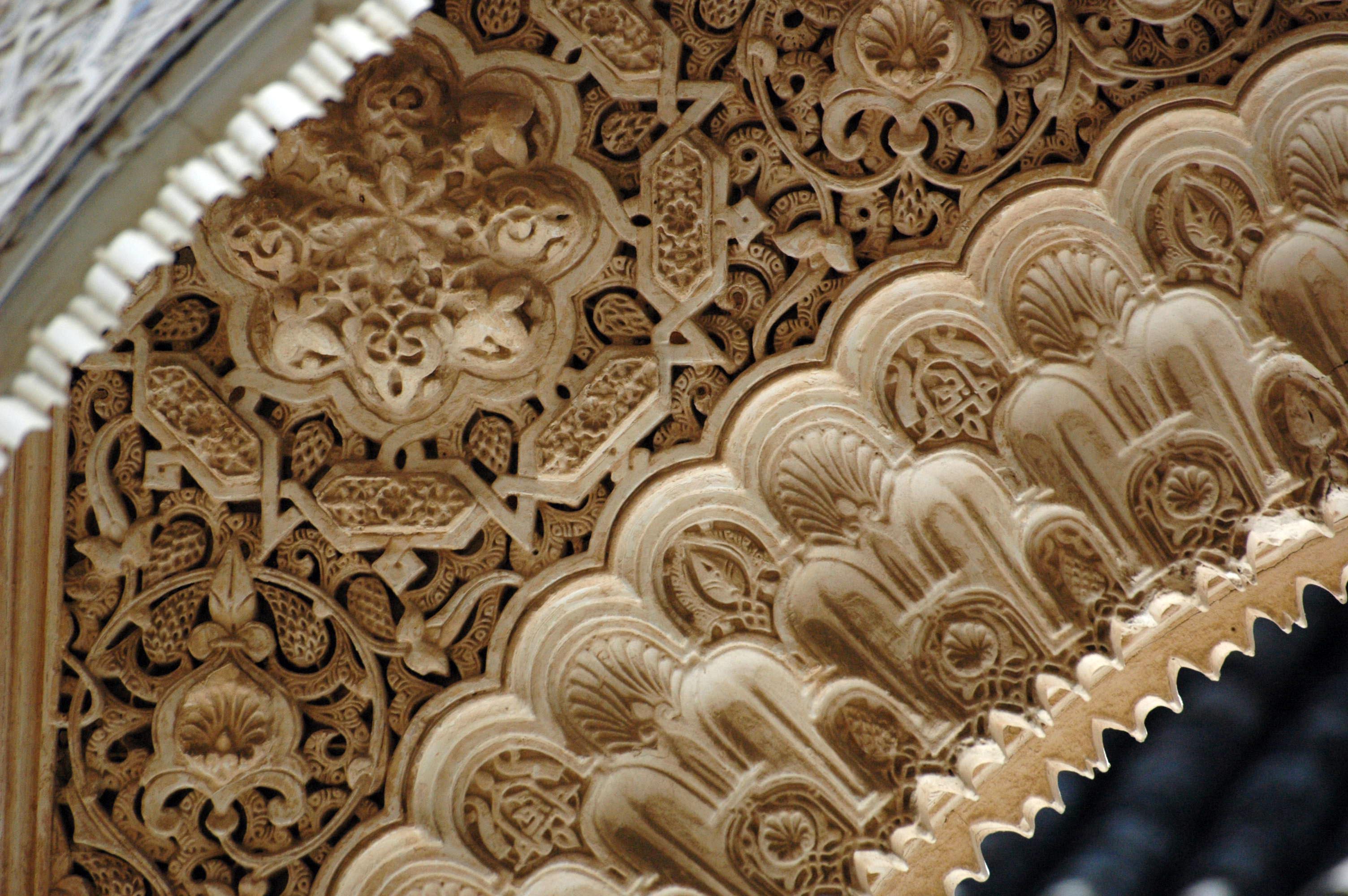
The defining characteristics of Islamic art and architecture often revolve around an abstract and decorative aesthetic, prioritizing pattern, geometry, and calligraphy over figural representation in religious contexts. The arabesque, a complex, scrolling vegetal motif, is a hallmark, symbolizing the infinite nature of God and the interconnectedness of creation. Geometric patterns, often intricate and tessellating, demonstrate a sophisticated understanding of mathematics and spatial organization, creating mesmerizing visual experiences that can evoke a sense of order and transcendence. Calligraphy, particularly the Arabic script, is elevated to a high art form, used to adorn mosques, manuscripts, and objects with verses from the Qur'an or poetry. Architectural innovations include the development of the mosque, with its characteristic minaret, dome, and mihrab (a niche indicating the direction of Mecca), as well as the widespread use of tilework, stucco, and carved wood for both structural and decorative purposes. The concept of 'aniconism' – the avoidance of religious imagery – in many Islamic traditions led to a focus on these non-representational forms, pushing the boundaries of abstract design and ornamentation across various media, from ceramics and textiles to metalwork and illuminated manuscripts.
📊 Key Facts & Numbers
The sheer scale and geographical reach of Islamic art and architecture are staggering. The Great Mosque of Córdoba, Spain, originally begun in 785 CE, famously features over 1,300 columns and 850,000 mosaic tiles. The Taj Mahal in Agra, India, completed around 1653 CE, required an estimated 20,000 artisans and cost approximately 32 million Indian rupees at the time, a sum equivalent to billions of dollars today. The Alhambra palace complex in Granada, Spain, showcases over 10,000 square meters of intricate stucco work. The global carpet trade, a significant aspect of Islamic textile art, sees billions of dollars in annual revenue, with traditional Persian and Turkish carpets commanding premium prices, sometimes exceeding $100,000 for a single piece. The production of illuminated Qur'ans, a painstaking process, could take years, with some manuscripts containing over 600 pages of intricate calligraphy and illumination.
👥 Key People & Organizations
While the concept of 'Islamic art' is a broad Western construct, numerous influential figures and dynasties shaped its trajectory. The Umayyad dynasty was pivotal in early synthesis, commissioning masterpieces like the Dome of the Rock in Jerusalem. The Abbasid Caliphate fostered intellectual and artistic growth, with Baghdad becoming a major center. Architects like Mimar Sinan (c. 1488/1490 – 1588), chief architect to the Ottoman sultans, designed over 300 structures, including the magnificent Süleymaniye Mosque in Istanbul. The Safavid rulers in Persia patronized exquisite manuscript illumination and tilework, exemplified by the mosques of Isfahan. In Mughal India, emperors like Akbar and Shah Jahan commissioned monumental projects like the Taj Mahal and the Red Fort. Contemporary artists such as Aisha Khalid and Waqas Ahmad Khwaja continue to reinterpret traditional motifs and techniques, engaging with the legacy of Islamic art in new ways. Institutions like the Metropolitan Museum of Art and the Victoria and Albert Museum house extensive collections, playing a crucial role in scholarship and public engagement.
🌍 Cultural Impact & Influence
The influence of Islamic art and architecture extends far beyond the Muslim world, permeating global aesthetics and design. The intricate geometric patterns and arabesques have inspired countless artists, designers, and architects, from M.C. Escher's tessellations to contemporary interior design trends. The architectural principles, such as the use of courtyards for climate control and the sophisticated integration of light and shadow, have been adopted and adapted worldwide. The tradition of illuminated manuscripts and miniature painting influenced European art, particularly during the Middle Ages and the Renaissance. The vibrant colors and complex designs of Persian and Turkish carpets have become synonymous with luxury and artistic achievement, influencing textile arts globally. Furthermore, the philosophical underpinnings of Islamic art, emphasizing order, balance, and the divine, continue to resonate, offering a counterpoint to purely representational or utilitarian aesthetics. The concept of wabi-sabi, though Japanese, shares a certain appreciation for imperfection and the beauty of natural forms that can be found in some Islamic decorative arts.
⚡ Current State & Latest Developments
In the 21st century, Islamic art and architecture are experiencing a dynamic resurgence and reinterpretation. Contemporary artists are increasingly engaging with traditional motifs, materials, and techniques, often infusing them with modern sensibilities and critical commentary. Exhibitions dedicated to Islamic art are held regularly in major global institutions, attracting diverse audiences and fostering new scholarship. Architectural projects across the Muslim world, from the Burj Khalifa in Dubai to innovative mosque designs in Southeast Asia, continue to push the boundaries of engineering and aesthetics, often seeking to blend tradition with modernity. Digital technologies are also playing a role, with virtual reality tours of historical sites and online platforms for showcasing contemporary Islamic art gaining traction. The global market for Islamic art and antiquities remains robust, with auctions at houses like Sotheby's and Christie's frequently achieving significant prices, underscoring its enduring appeal and economic value. The ongoing dialogue between tradition and innovation is a key characteristic of its current state.
🤔 Controversies & Debates
The very categorization of 'Islamic art' is a subject of ongoing debate. Critics argue that the term can homogenize diverse regional and historical styles, overlooking the distinct artistic traditions of Persia, North Africa, India, and Spain, for instance. The emphasis on aniconism in religious art is also complex; while mosques and religious texts largely eschew figural representation, secular art forms, particularly in Persian and Mughal miniatures, often feature human and animal figures. The historical narrative of Islamic art has also been critiqued for its Eurocentric perspective, often focusing on influences and reception in the West rather than the internal developments and cross-cultural exchanges within the Islamic world. Furthermore, the destruction of historical Islamic sites by ex
Key Facts
- Category
- aesthetics
- Type
- topic