
Contents
Overview
In-orbit assembly (IOA) is the process of constructing, assembling, or servicing spacecraft and structures in space, rather than launching them as fully formed units. Think of it as building a skyscraper, but instead of on Earth, you're doing it in the vacuum of space. This capability is crucial for building larger, more complex, and more capable space systems that are simply too big or too fragile to launch from Earth. It opens the door to everything from massive space telescopes and orbital manufacturing facilities to interplanetary spacecraft and lunar bases. For anyone involved in space infrastructure or deep space exploration, understanding IOA is no longer optional; it's foundational.
🛠️ The Mechanics: How It Works
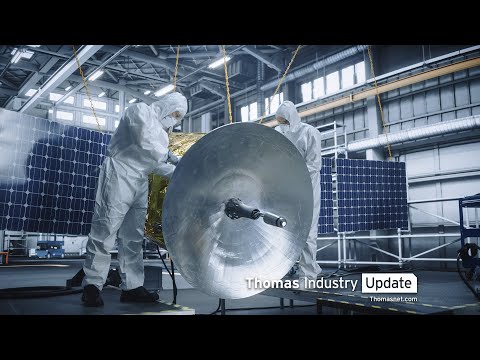
The core mechanics of IOA involve robotic arms, automated systems, and potentially human astronauts working together. Components are launched separately and then brought together in orbit. Robotic systems, often mounted on mobile platforms like Northrop Grumman's Cygnus or Maxar's robotic arms, grapple and connect these modules. Advanced rendezvous and docking techniques are essential, as is precise orbital maneuvering. The process relies heavily on autonomous systems and sophisticated control software to ensure modules align perfectly, minimizing the need for risky human intervention. The goal is to create a seamless, efficient construction process in a zero-gravity, vacuum environment.
🌟 Why Now? The Driving Forces
Several factors are converging to make IOA a reality now. The dramatic reduction in launch costs thanks to reusable rockets like SpaceX's Falcon 9 has made it economically feasible to send up the necessary components. Simultaneously, advancements in robotics, AI, and materials science have provided the tools needed for complex assembly tasks. Furthermore, the growing demand for larger and more sophisticated space assets, driven by commercial interests in satellite constellations and government ambitions for lunar and Martian presence, creates a clear market pull. The Vibe Score for IOA is currently high, reflecting significant investor and governmental interest.
🛰️ Current Projects & Pioneers
Several pioneering projects are already demonstrating IOA capabilities. Northrop Grumman's MEV-1, the first commercial satellite life-extension vehicle, has successfully docked with and repositioned older satellites, a form of in-orbit servicing that paves the way for assembly. Maxar Technologies is developing robotic systems for future assembly tasks, and Axiom Space is building modules for its commercial space station, which will be assembled in orbit. NASA's Lunar Gateway project is another prime example, designed as a modular outpost assembled in lunar orbit. These initiatives are not just theoretical; they are active demonstrations of what's possible.
💰 Cost & Investment Landscape
The financial landscape of IOA is complex, marked by significant upfront investment and long-term payoff potential. While individual launches are becoming cheaper, the cost of developing and deploying the robotic systems, specialized modules, and mission control infrastructure for IOA is substantial. Venture capital is flowing into companies focused on in-orbit servicing and assembly, recognizing the potential for a multi-billion dollar market. Government contracts, particularly from agencies like NASA and the US Space Force, are critical for de-risking early development. The Controversy Spectrum here is moderate, with debates centering on the return on investment timeline and the balance between public and private funding.
⚖️ Challenges & Controversies
IOA is not without its hurdles. The harsh space environment—radiation, extreme temperatures, and micrometeoroids—poses significant engineering challenges. The complexity of robotic manipulation in zero-g requires unprecedented levels of precision and reliability. Furthermore, the legal and regulatory framework for orbital construction and ownership is still evolving, raising questions about liability and debris mitigation. There's also the inherent risk of mission failure; a single critical error during assembly could jeopardize an entire multi-billion dollar project. The Pessimistic Perspective often highlights these technical and regulatory uncertainties.
📈 Future Outlook & Potential
The future of IOA is poised for exponential growth. We can anticipate the construction of larger, more powerful telescopes that dwarf JWST, orbital fuel depots enabling deep space missions, and even in-space manufacturing facilities producing goods that are impossible to make on Earth. The Optimistic Perspective sees IOA as the key enabler of a robust cislunar economy and humanity's expansion beyond Earth orbit. Companies are already planning for orbital construction yards and modular space stations that can be reconfigured and expanded over time, fundamentally changing how we utilize space.
💡 Practical Considerations for Stakeholders
For organizations considering engaging with IOA, understanding the current technological readiness levels (TRLs) of various assembly techniques is paramount. Assess your mission objectives against the capabilities of existing and emerging IOA providers. Investigate the supply chain for modular components and the reliability of robotic servicing platforms. Familiarize yourself with the evolving international regulations governing orbital activities. Early engagement with key players like Maxar Technologies or Northrop Grumman can provide crucial insights into project timelines and partnership opportunities. The time to plan for your orbital future is now.
Key Facts
- Year
- 1973
- Origin
- NASA (Skylab)
- Category
- Aerospace & Defense
- Type
- Concept
Frequently Asked Questions
What's the biggest technical challenge for in-orbit assembly?
The most significant technical challenge is achieving the required precision and reliability of robotic manipulation in the harsh vacuum of space. Components must align perfectly, often with sub-millimeter accuracy, without the benefit of gravity to guide them. This demands highly sophisticated AI, advanced sensors, and extremely robust robotic systems capable of operating autonomously for extended periods. Failures in these systems can be catastrophic, making redundancy and rigorous testing absolutely critical.
How does in-orbit assembly reduce costs compared to launching fully assembled structures?
While the initial development costs for IOA are high, it reduces costs in the long run by overcoming the size and mass limitations of launch vehicles. Larger structures can be built in orbit from smaller, more manageable components, which are cheaper to launch. This also allows for more complex designs that would be impossible to fit within a rocket fairing. Furthermore, in-orbit servicing and assembly can extend the lifespan of existing assets, deferring costly replacements and maximizing return on investment for space infrastructure.
Are there any legal or regulatory hurdles for in-orbit assembly?
Yes, the legal and regulatory landscape is still developing. Key issues include establishing clear ownership of assembled structures, defining liability in case of accidents or debris creation, and ensuring compliance with international space treaties. The Outer Space Treaty of 1967 provides a foundational framework, but specific regulations for large-scale orbital construction, resource utilization, and debris mitigation are still being formulated by bodies like the United Nations Committee on the Peaceful Uses of Outer Space (COPUOS).
What role do humans play in in-orbit assembly?
Currently, the emphasis is on autonomous and robotic assembly to minimize risk and cost. However, human astronauts are expected to play a crucial role in more complex assembly tasks, especially for initial infrastructure like space stations or habitats. Astronauts can perform intricate repairs, adapt to unforeseen issues, and oversee robotic operations. Future missions may see a hybrid approach, with robots handling routine tasks and humans intervening for critical or delicate operations.
Which companies are leading the charge in in-orbit assembly?
Several companies are at the forefront. Northrop Grumman is a key player with its Mission Extension Vehicle (MEV) and planned robotic servicing capabilities. Maxar Technologies is developing advanced robotic arms and systems for assembly. Axiom Space is building modular components for its commercial space station, designed for orbital assembly. Sierra Space is also developing inflatable modules and associated technologies. NASA's Gateway program is a significant government-led initiative driving IOA development.
What are the potential applications of in-orbit assembly beyond satellites?
The applications are vast. IOA can enable the construction of large space-based solar power arrays, advanced scientific observatories far larger than anything currently possible, orbital manufacturing facilities for unique materials, refueling depots for deep space missions, and the foundational elements for lunar and Martian bases. It's the key to building the infrastructure needed for a sustained human presence beyond Earth orbit and for a robust cislunar economy.