
Contents
Overview
The genesis of the Haber-Bosch process lies in the urgent need for a reliable source of nitrates for explosives and fertilizers, a problem that loomed large for Germany at the turn of the 20th century. Fritz Haber first demonstrated a method for synthesizing ammonia from nitrogen and hydrogen gases under extreme pressure and temperature, using a uranium catalyst. This breakthrough was scaled up dramatically by Carl Bosch, an engineer at Badische Anilin- & Soda-Fabrik, who developed a process capable of industrial-level production. Bosch's engineering prowess was crucial; he devised high-pressure reactors and efficient heat exchangers that made Haber's laboratory success a commercial reality, fundamentally altering global food production and warfare capabilities.
⚙️ How It Works
At its heart, the Haber-Bosch process is a reversible exothermic reaction: nitrogen gas (N₂) from the air reacts with hydrogen gas (H₂), typically derived from natural gas steam reforming, to produce ammonia (NH₃). The reaction is represented by the equation N₂ + 3H₂ ⇌ 2NH₃. To overcome the thermodynamic stability of the nitrogen molecule and achieve a reasonable reaction rate, the process demands high temperatures (around 400-500°C) and extremely high pressures (150-250 atmospheres, and sometimes up to 1000 atm). A catalyst, most commonly finely divided iron with promoters like potassium oxide and aluminum oxide, is essential to lower the activation energy and increase the reaction speed. The ammonia produced is then cooled and liquefied, separating it from unreacted gases which are recycled back into the reactor, maximizing yield.
📊 Key Facts & Numbers
The scale of the Haber-Bosch process is almost incomprehensible: global ammonia production exceeds 150 million metric tons annually, with over 80% dedicated to fertilizer production. This process is responsible for synthesizing enough nitrogen to fertilize crops that feed approximately half the world's population. The energy required is substantial, accounting for an estimated 1-2% of the world's total energy consumption. Furthermore, the production of hydrogen via steam reforming of natural gas releases about 1.8 tons of carbon dioxide for every ton of ammonia produced, making the process a significant contributor to greenhouse gas emissions.
👥 Key People & Organizations
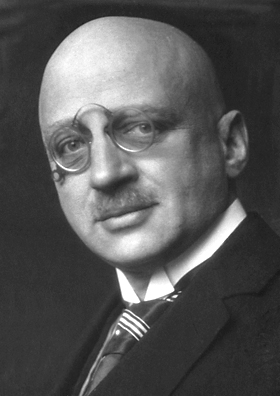
The two titans of this process are Fritz Haber and Carl Bosch. Haber, a Nobel laureate in Chemistry (1918), provided the fundamental scientific breakthrough, though his later involvement in chemical warfare during World War I casts a long shadow. Bosch, a Nobel laureate in Chemistry (1931) for his industrial process development, was the engineering genius who translated Haber's discovery into a world-changing technology for Badische Anilin- & Soda-Fabrik. Beyond these two, countless engineers and chemists at companies like Yara International, CF Industries, and SRF Limited have continuously optimized the process over the past century, improving efficiency and safety.
🌍 Cultural Impact & Influence
The Haber-Bosch process is arguably the most significant technological development of the 20th century in terms of its impact on human population growth and sustenance. It enabled the Green Revolution, dramatically increasing crop yields and averting widespread famine predicted by Thomas Malthus. Its influence extends to warfare, as nitrates are crucial for explosives; Germany's ability to produce ammonia domestically was a key factor in its ability to sustain its war effort during World War I despite Allied blockades. The sheer ubiquity of synthetic fertilizers derived from this process means that nearly every bite of food consumed by billions has been touched by this industrial marvel.
⚡ Current State & Latest Developments
Current efforts in the Haber-Bosch process are focused on reducing its substantial environmental footprint. Researchers are exploring 'green ammonia' production, which involves using renewable electricity to split water for hydrogen (via electrolysis) rather than relying on fossil fuels. Companies like Topsoe and Haber Gas are developing new catalysts and reactor designs to lower energy requirements and enable operation at milder conditions. There's also a push for distributed, smaller-scale ammonia production facilities that could be powered by local renewable energy sources, potentially decentralizing fertilizer production and reducing transportation costs and emissions.
🤔 Controversies & Debates
The Haber-Bosch process is a double-edged sword, celebrated for feeding the world yet criticized for its environmental toll. The primary controversy centers on its massive energy consumption and its reliance on natural gas, a fossil fuel, making it a significant source of anthropogenic CO₂ emissions. Critics argue that the process's contribution to climate change is a direct consequence of its industrial scale. Furthermore, the widespread use of synthetic fertilizers has led to environmental problems like eutrophication of waterways due to nitrogen runoff and the release of nitrous oxide, a potent greenhouse gas. The debate is whether its life-sustaining benefits outweigh its ecological costs, and how quickly we can transition to more sustainable methods.
🔮 Future Outlook & Predictions
The future of ammonia production hinges on decarbonization. The development of cost-effective green ammonia, produced using renewable energy and electrolysis, is seen as the holy grail. This could not only decarbonize fertilizer production but also position ammonia as a viable carbon-free fuel for shipping and energy storage. Experts predict that by 2050, a significant portion of ammonia production could be green, driven by policy incentives and technological advancements. However, the transition will require massive investment in renewable energy infrastructure and new production facilities, a challenge that will likely take decades to fully realize.
💡 Practical Applications
The most critical application of the Haber-Bosch process is the production of ammonia (NH₃), which serves as the primary feedstock for nitrogenous fertilizers. These fertilizers are indispensable for modern agriculture, enabling higher crop yields to feed a growing global population. Beyond agriculture, ammonia is used in the production of plastics, explosives, textiles, refrigerants, and pharmaceuticals. Increasingly, ammonia is being explored as a potential carbon-free fuel for internal combustion engines and as a medium for storing and transporting hydrogen, positioning it as a key player in future energy systems.
Key Facts
- Category
- technology
- Type
- technology