Defining Roles and Responsibilities | Vibepedia
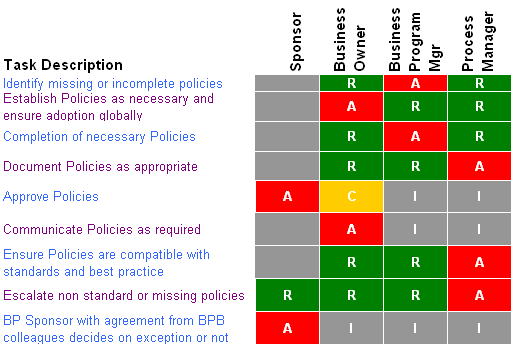
Defining roles and responsibilities is the foundational practice of clearly delineating who is accountable for what within a team, project, or organization…
Contents
Overview
The formalization of roles and responsibilities predates modern management theory, with ancient military structures and early guilds meticulously defining duties to ensure operational cohesion. However, the modern emphasis on explicit role definition gained traction with the rise of industrial-era organizations and the scientific management principles championed by figures like Frederick Taylor in the early 20th century. Taylor's work, though controversial, highlighted the need for standardized tasks and clear lines of authority. Later, the development of project management methodologies in the mid-20th century, particularly within large-scale engineering and defense projects, necessitated more sophisticated tools for mapping out who was responsible for what. The RACI matrix, popularized by IBM, emerged as a pivotal tool, codifying a systematic approach to role assignment that moved beyond simple job descriptions.
⚙️ How It Works
At its core, defining roles and responsibilities involves breaking down a project or organizational function into discrete tasks and then assigning specific levels of involvement to each stakeholder. The RACI matrix is a prime example, assigning one of four distinct roles: Responsible (executes the task), Accountable (owns the outcome, has final say), Consulted (provides input), and Informed (receives updates). Beyond RACI, other methods involve creating detailed job descriptions, organizational charts, and standard operating procedures that explicitly outline duties, authorities, and reporting lines, ensuring that the flow of work and decision-making is transparent and efficient.
📊 Key Facts & Numbers
Organizations that clearly define roles and responsibilities reportedly experience fewer project delays. Companies with mature role-definition processes reportedly see an increase in team productivity. In large enterprises with over 1,000 employees, the cost of duplicated effort due to unclear roles can run into millions of dollars annually. A survey reportedly found that a significant majority of employees feel more engaged when their roles and responsibilities are clearly understood.
👥 Key People & Organizations
Key figures in management theory have profoundly shaped our understanding of roles and responsibilities. Henry Ford, through his assembly line innovations at Ford Motor Company, pioneered extreme task specialization, defining roles with granular precision. Peter Drucker, a prolific management consultant, emphasized the importance of 'managing oneself' and understanding one's own strengths and responsibilities within an organization. The Boston Consulting Group (BCG) and McKinsey & Company have developed numerous frameworks and consulting practices focused on organizational design and role clarity for Fortune 500 companies. On the software side, platforms like Atlassian (Jira, Confluence) and Asana provide tools that facilitate the tracking and management of tasks, indirectly supporting role definition.
🌍 Cultural Impact & Influence
The impact of clearly defined roles extends far beyond operational efficiency, shaping organizational culture and individual career trajectories. In the realm of team sports, the precise roles of quarterback, defender, or striker are critical to success, mirroring the need for specialized functions in business. The concept has permeated popular culture, from the archetypal character roles in Shakespearean plays to the distinct functions of superheroes in the Marvel Cinematic Universe. Conversely, poorly defined roles can lead to a toxic work environment, characterized by blame-shifting and a lack of accountability, significantly lowering employee morale and increasing employee turnover. The rise of remote work and gig economy platforms has further amplified the need for explicit role definition to manage distributed and fluid teams effectively.
⚡ Current State & Latest Developments
In the current landscape of agile methodologies and hybrid work models, the dynamic definition of roles and responsibilities is paramount. Agile frameworks like Scrum emphasize cross-functional teams where roles can be fluid but are still clearly defined within sprints (e.g., Scrum Master, Product Owner). The increasing adoption of OKRs (Objectives and Key Results) by companies like Google and Intel necessitates clear ownership of key results, directly tying into role definition. Furthermore, the integration of AI in workflow automation is prompting a re-evaluation of human roles, shifting focus from task execution to oversight, strategy, and complex problem-solving, demanding a more sophisticated approach to defining responsibilities in human-AI collaboration.
🤔 Controversies & Debates
A significant debate surrounds the rigidity versus flexibility of role definitions. Critics of rigid structures, often found in traditional hierarchical organizations, argue they stifle creativity and adaptability, leading to 'siloed' thinking. Conversely, overly fluid role definitions, common in some startup cultures or highly agile environments, can lead to confusion, burnout, and a lack of clear accountability, as individuals may feel overwhelmed or unsure of their primary duties. The question of who should be 'Accountable' versus merely 'Responsible' is a perennial point of contention, often leading to power struggles. Furthermore, the ethical implications of assigning responsibility for tasks that involve significant risk or ethical ambiguity, particularly in fields like autonomous vehicle development or biotechnology, remain a subject of intense scrutiny.
🔮 Future Outlook & Predictions
The future of defining roles and responsibilities will likely be shaped by the increasing integration of AI and automation. We can expect a rise in 'AI-augmented roles' where human responsibilities focus on strategic oversight, ethical judgment, and complex exception handling, while AI handles routine tasks. This will necessitate new frameworks for defining accountability in human-AI teams, potentially leading to concepts like 'AI accountability partners.' The trend towards flatter organizational structures and increased employee autonomy will also drive a need for more self-managed teams, where individuals take greater ownership of defining and executing their roles collaboratively. Expect a greater emphasis on 'skill-based' role assignment rather than fixed job titles, allowing for more dynamic team formation around specific project needs, as seen in platforms like [[linkedin|LinkedIn]'s] evolving professional profiles.
💡 Practical Applications
Defining roles and responsibilities is a cornerstone of effective project management and organizational design. In software development, Agile methodologies like Scrum use roles such as Product Owner (accountable for product vision) and Scrum Master (responsible for facilitating the process). In healthcare, clear roles are vital for patient safety, with physicians, nurses, and specialists each having distinct responsibilities in patient care pathways, often managed through EHR systems. Construction projects rely heavily on detailed WBS and RACI charts to assign tasks to various trades, from electricians to plumbers. Even in creative fields, like film production, roles like director, cinematographer, and editor have specific, non-overlapping responsibilities that are critical to bringing a vision to life.
Key Facts
- Category
- concepts
- Type
- topic