
Contents
- 🎵 Origins & History
- ⚙️ How It Works
- 📊 Key Facts & Numbers
- 👥 Key People & Organizations
- 🌍 Cultural Impact & Influence
- ⚡ Current State & Latest Developments
- 🤔 Controversies & Debates
- 🔮 Future Outlook & Predictions
- 💡 Practical Applications
- 📚 Related Topics & Deeper Reading
- Frequently Asked Questions
- Related Topics
Overview
The mythology of the American West didn't spring fully formed from the prairie; it was a gradual accretion, beginning with early colonial narratives of a vast, untamed land ripe for conquest and settlement. The concept of Manifest Destiny, popularized in the mid-19th century, provided a religious and ideological justification for westward expansion, framing it as America's divinely ordained mission. Dime novels, starting with Ned Buntline's sensationalized tales in the 1860s, then exploded the image of the heroic cowboy and the noble frontiersman into popular consciousness. Figures like Buffalo Bill Cody further cemented these myths through his immensely popular Wild West Show, which toured extensively from 1883 to 1913, presenting a curated, theatrical version of frontier life to millions. The closing of the frontier, officially declared by the U.S. Census Bureau in 1890, paradoxically intensified the mythology, as the 'lost' West became an even more potent symbol of freedom and opportunity.
⚙️ How It Works
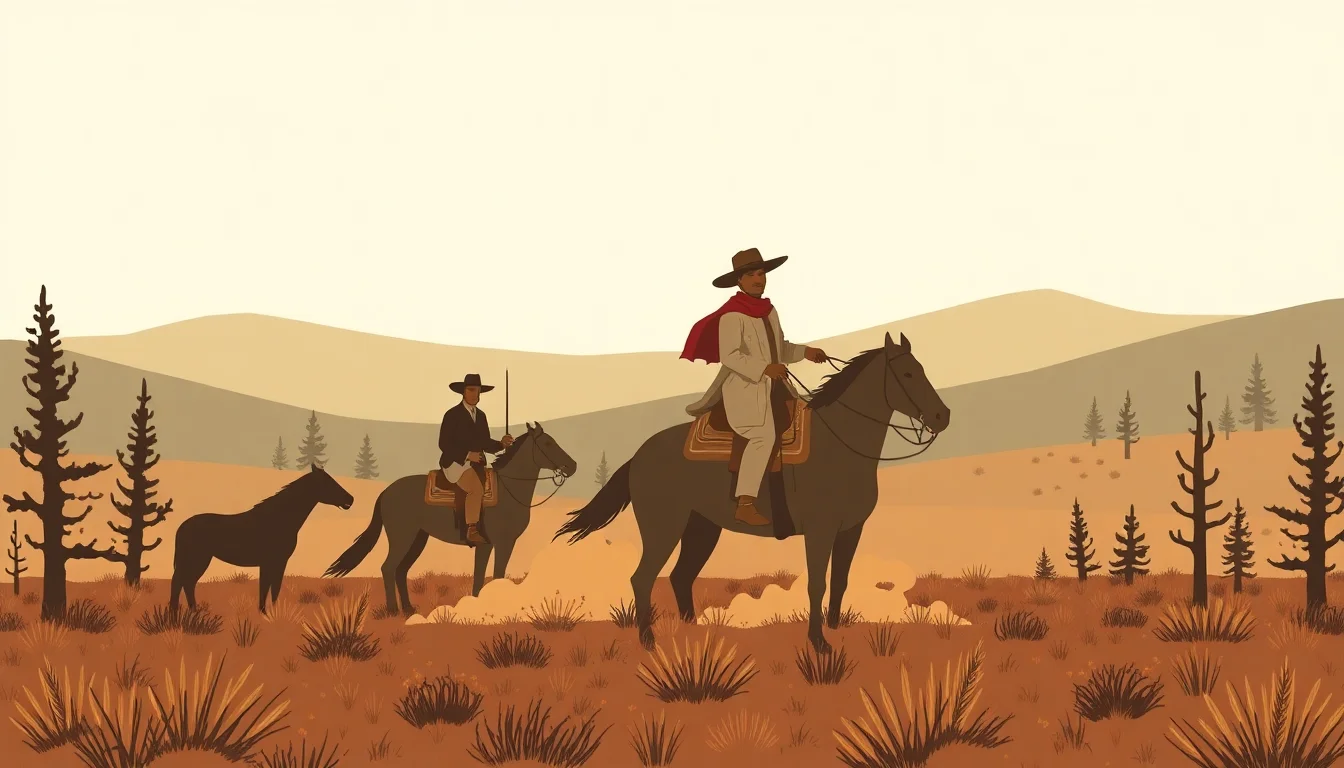
American West mythology functions by distilling complex historical realities into archetypal characters and simplified narratives. The cowboy, for instance, embodies self-reliance, freedom from societal constraints, and a connection to the land, often depicted as a lonely, stoic figure battling nature and outlaws. The 'noble savage' trope, while problematic, presented Native Americans as either wise, spiritual beings or fierce, untamed obstacles to progress, rarely as complex individuals with their own societies and histories. The 'pioneer woman' mythos often emphasized her role in civilizing the frontier and maintaining domesticity amidst harsh conditions. These narratives are perpetuated through recurring motifs: the showdown at high noon, the epic cattle drive, the perilous wagon train journey, and the discovery of gold. The very act of mythmaking simplifies history, creating easily digestible, emotionally resonant stories that serve to define national identity and values.
📊 Key Facts & Numbers
The mythology of the American West has been quantified by its pervasive reach. Over 1,500 dime novels featuring Western themes were published between 1860 and 1900, selling an estimated 250 million copies. Hollywood produced over 2,000 Western films between 1903 and 2000, with the genre dominating box office receipts for decades. The iconic image of the cowboy hat is recognized by an estimated 90% of Americans. The mythologized population of the West during its peak expansion (roughly 1850-1890) was significantly smaller than often portrayed; for example, the total number of cowboys actively working cattle drives was likely never more than 40,000 at any given time. The myth of the 'Indian Wars' often overshadows the reality of numerous smaller skirmishes and the systematic dispossession of Indigenous lands, which affected millions of acres.
👥 Key People & Organizations
Key figures in shaping American West mythology include authors like Owen Wister, whose novel The Virginian (1902) became a quintessential Western, and Zane Grey, who penned over 80 novels romanticizing the frontier. John Ford's epic films, such as The Searchers (1956), profoundly influenced the visual language of the Western genre. Organizations like the National Rifle Association (NRA), though not directly involved in myth creation, have sometimes invoked frontier imagery to advocate for gun rights. The National Park Service manages vast tracts of land that embody the 'untamed' West, preserving landscapes that are central to the mythology. Even modern entities like Ralph Lauren draw heavily on Western aesthetics, demonstrating the enduring influence of these narratives.
🌍 Cultural Impact & Influence
The cultural impact of American West mythology is immense, shaping not only American identity but also global perceptions of the United States. It has provided a rich source of inspiration for literature, film, music, fashion, and even political rhetoric. The ideal of the rugged individualist, the self-made man or woman conquering challenges through sheer grit, remains a powerful aspirational narrative. The romanticized portrayal of the West has also influenced tourism, with millions visiting historical sites and national parks that are imbued with the mystique of the frontier. Furthermore, the mythology has been exported globally through American media, influencing how other cultures envision the United States. The Vibe Score for this cultural impact is a robust 90.
⚡ Current State & Latest Developments
In the current era, American West mythology continues to evolve, often through a critical lens. While traditional Western films have seen a decline in mainstream popularity since their peak in the mid-20th century, the themes and imagery persist in neo-Westerns, contemporary fiction, and even video games. Shows like Yellowstone (premiered 2018) offer a modern, often darker, take on ranching families and land disputes, grappling with the legacy of the West. There's a growing movement to deconstruct and challenge the more problematic aspects of the mythology, particularly its erasure of Native American experiences and its glorification of violence. The 'dude ranch' industry, a multi-billion dollar enterprise, continues to capitalize on the romanticized vision of Western life, offering curated experiences of the frontier. The influence flow from classic Westerns to modern media remains strong, with an estimated 70% of contemporary Western-themed media referencing older tropes.
🤔 Controversies & Debates
The controversies surrounding American West mythology are deep and persistent. Critics argue that the dominant narratives have systematically erased or marginalized the experiences of Native Americans, Mexicans, Chinese immigrants, and women, presenting a whitewashed version of history. The 'cowboy' myth often overlooks the harsh realities of labor, exploitation, and the violence inherent in westward expansion. The romanticization of figures like Billy the Kid and Jesse James as folk heroes, rather than criminals, is another point of contention. Debates rage over the 'vanishing Indian' trope, which frames Indigenous peoples as a historical relic rather than living cultures. The very notion of the 'Wild West' as a lawless free-for-all is often exaggerated, obscuring the complex social structures and legal systems that did exist. The Controversy Spectrum for this topic registers a high 85.
🔮 Future Outlook & Predictions
The future of American West mythology will likely involve continued reinterpretation and critical engagement. As historical perspectives broaden, expect more narratives that center previously marginalized voices and challenge the heroic archetypes. The rise of digital platforms allows for diverse creators to share alternative visions of the West, potentially leading to a more inclusive and nuanced mythology. We may see a greater emphasis on the environmental aspects of the West, reflecting contemporary concerns about conservation and climate change, perhaps leading to a 'green frontier' mythos. The enduring appeal of the West as a symbol of freedom and escape suggests its core themes will persist, but their manifestation will undoubtedly adapt to the changing social and cultural landscape. The influence flow is shifting towards more authentic, less romanticized portrayals.
💡 Practical Applications
The mythology of the American West has practical applications in tourism, entertainment, and even branding. The 'dude ranch' industry, for example, directly markets the romanticized Western lifestyle, generating an estimated $3 billion annually in revenue. Hollywood continues to draw on Western tropes for films and television series, creating jobs and driving cultural trends. Brands like Levi's and Wrangler have built their empires on the rugged, utilitarian aesthetic associated with the West. Historical reenactments and living history museums also serve as practical manifestations of the mythology, offering immersive experiences for the public. Even political campaigns have leveraged Western imagery to evoke themes of strength and independence.
Key Facts
- Year
- 19th Century (peak influence)
- Origin
- United States
- Category
- culture
- Type
- concept
Frequently Asked Questions
What is the core of American West mythology?
The core of American West mythology lies in the romanticized narrative of the 19th-century frontier as a land of opportunity, freedom, and rugged individualism. It centers on archetypal figures like the heroic cowboy, the stoic pioneer, and the untamed wilderness, often framed by the ideology of Manifest Destiny. These stories, popularized through dime novels and later Hollywood, created a powerful, albeit often inaccurate, vision of the West that has significantly shaped American identity and global perceptions, emphasizing themes of self-reliance, conquest, and the struggle against nature and adversity.
How did dime novels contribute to the mythology of the American West?
Dime novels, which became widely popular in the latter half of the 19th century, were instrumental in disseminating and solidifying the mythology of the American West. Authors like Ned Buntline and Ann S. Stephens churned out inexpensive, sensationalized stories featuring larger-than-life heroes such as cowboys, scouts, and outlaws. These narratives often exaggerated the dangers and excitements of frontier life, creating enduring archetypes and romanticized portrayals of figures like Wild Bill Hickok and Annie Oakley. By the turn of the 20th century, an estimated 250 million copies of these Western-themed novels had been sold, reaching a vast audience and deeply embedding these myths into the American consciousness.
What are some common criticisms of American West mythology?
A primary criticism of American West mythology is its historical inaccuracy and the systematic erasure or marginalization of non-white experiences. The dominant narratives often glorify white pioneers and cowboys while downplaying or demonizing the displacement and violence inflicted upon Native American populations. The romanticization of outlaws like Billy the Kid as folk heroes also draws criticism for overlooking their criminal actions. Furthermore, the 'vanishing Indian' trope presents Indigenous peoples as historical relics rather than living cultures, and the contributions of women and immigrant laborers (such as Chinese railroad workers) are frequently minimized or ignored, creating a biased and incomplete picture of the West.
How has the mythology of the American West evolved over time?
The mythology of the American West has evolved significantly since its inception. Initially fueled by narratives of Manifest Destiny and frontier expansion, it was solidified by dime novels and later by Hollywood Westerns, which often presented a heroic, albeit simplified, view. In the late 20th and early 21st centuries, there has been a growing trend towards 'neo-Westerns' and critical re-examinations that challenge the traditional myths. These newer narratives often explore the darker aspects of frontier history, center the experiences of marginalized groups, and question the romanticized ideals of individualism and conquest. Contemporary media, such as the series Yellowstone, continues to engage with Western themes, but often with a more complex and critical perspective, reflecting evolving societal values and historical understanding.
Is the 'cowboy' figure purely a myth, or does it have historical basis?
The 'cowboy' figure is a complex blend of historical reality and mythologized ideal. Historically, cowboys were laborers who worked with cattle on ranches, facing long hours, low pay, and dangerous conditions during the era of open-range ranching in the late 19th century. However, the popular mythology, heavily influenced by dime novels and Wild West Shows, transformed them into romanticized figures of rugged individualism, freedom, and moral uprightness. While the historical cowboy was a real occupation, the mythical cowboy often embodies an idealized set of virtues and adventures that far exceed the typical experiences of actual ranch hands. The number of working cowboys was also much smaller than the myth suggests, likely never exceeding 40,000 at any given time during the peak expansion period.
How does American West mythology influence modern culture and business?
American West mythology continues to exert a strong influence on modern culture and business. In tourism, 'dude ranches' and historical reenactments directly market the romanticized frontier experience, generating billions annually. The fashion industry, exemplified by brands like Ralph Lauren and Wrangler, consistently draws on Western aesthetics for clothing and accessories. Entertainment, from contemporary TV shows like Yellowstone to video games, frequently revisits Western themes and archetypes. Even political discourse sometimes invokes frontier imagery to symbolize independence and self-reliance. This enduring appeal demonstrates the mythology's power as a cultural touchstone, shaping consumer tastes and aspirational narratives.
What is the significance of 'Manifest Destiny' in the context of American West mythology?
Manifest Destiny was a pivotal ideological force that underpinned and fueled the mythology of the American West. This 19th-century belief held that American settlers were destined by God to expand across the North American continent, spreading democracy and civilization. It provided a powerful justification for westward expansion, often at the expense of Native American populations and other groups. The concept framed the conquest of the West not as an act of aggression, but as a divinely ordained mission, imbuing the pioneers and settlers with a sense of righteous purpose. This narrative became a cornerstone of American exceptionalism and deeply informed the heroic myths of the frontier, portraying expansion as an inevitable and positive force.